















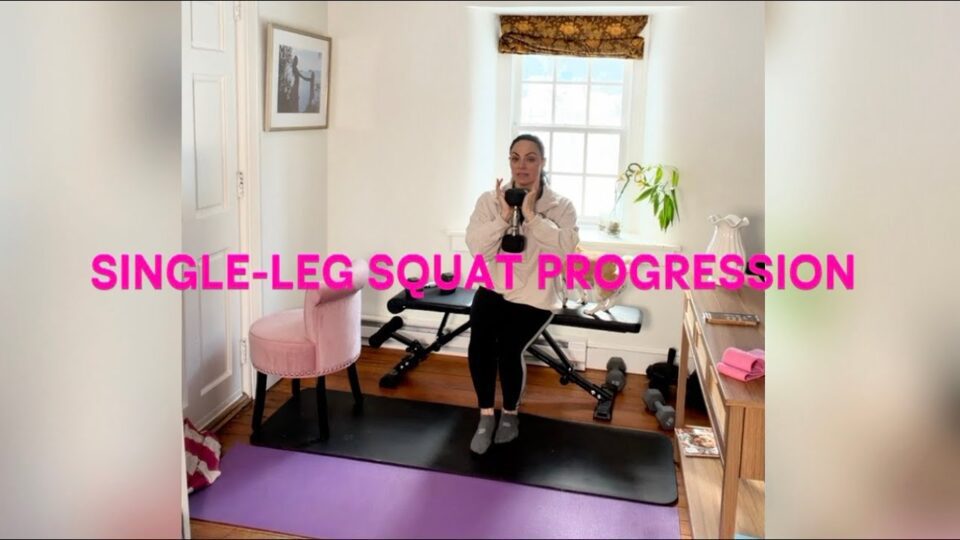

At first glance, the single-leg squat looks like a simple move, but don’t let its minimalism fool you. For many of us in the thick of parenting and managing busy households, this exercise is a profound reality check. It demands a cocktail of raw strength, neurological coordination, and deep stability—all concentrated on a single pillar of support.
Most of us harbor a “secret” weaker side, often the result of years spent carrying toddlers on one hip, lugging heavy diaper bags on one shoulder, or simply favoring a specific leg while standing at the kitchen counter. Single-leg movements confront these imbalances head-on, forcing each side of the body to pull its own weight. This isn’t just about fitness; it’s about correcting the structural “quirks” that lead to aches and pains down the road.
Women Over 40: How to Build a Strong Single-Leg Squat (Step-by-Step Progression)
For women over 40, functional strength is the ultimate insurance policy. As our hormonal profiles shift, maintaining muscle mass and bone density becomes a non-negotiable priority. Mastering the single-leg squat translates directly into everyday “mom-life” victories: navigating steep stairs with a laundry basket, rising gracefully from a low playroom floor, or maintaining your footing when a pet or child zooms past you.
By focusing on unilateral (one-sided) training, you unlock several key benefits:
- Symmetry: You ensure your dominant side isn’t doing all the heavy lifting, which protects your spine.
- Joint Integrity: Improved hip stability and knee tracking reduce the risk of common age-related injuries.
- Neurological Sharpness: Balancing on one leg forces the brain and muscles to communicate more effectively.
- Core Engagement: Your trunk must work overtime to keep you upright, providing a functional core workout without a single crunch.
If the idea of a full single-leg squat feels intimidating, remember that strength is built in layers. You don’t need to be an athlete to start; you just need a solid progression. Use the following steps to safely bridge the gap between where you are and where you want to be:
- The Chair Assist (Stability First): Stand in front of a sturdy chair or bench. Use your hands for support as you lower yourself down and push back up. This removes the fear of falling and lets your muscles learn the pattern.
- Fingertip Guidance: Once you feel steadier, reduce your “crutch.” Use only your fingertips for light balance support. This forces your leg to take on about 90% of the workload while your hands provide just enough confidence to keep your form clean.
- The Kickstand Method: Move away from the chair. Perform the squat with one leg doing the work, while the toes of your non-working foot lightly touch the floor behind you—like a bike’s kickstand. This challenges your balance while providing a safety net.
- The Independent Squat: Shift your full weight onto one leg. Focus on keeping your chest up and your knee tracking over your toes. Execute the movement slowly; momentum is the enemy of true strength.
- The Loaded Squat: Once you can perform 12–15 clean repetitions with just your body weight, it’s time to add resistance. Holding a light dumbbell or even a heavy water bottle adds a new level of bone-strengthening stimulus.
Consistency is the secret sauce here. Aim for 3 to 4 sets of 12–15 repetitions, and don’t rush to the next level. In your 40s and beyond, the goal isn’t just to move—it’s to move *well*.
Embracing single-leg training is a powerful way to reclaim your physical autonomy. It’s a reminder that your body is capable of evolving and becoming more resilient, regardless of age. By taking the time to address imbalances and build foundational stability, you aren’t just doing a workout; you are investing in a future where you move with ease, confidence, and strength. Focus on the journey of each repetition, ensure you’re giving your “weaker” side extra grace and attention, and celebrate the small wins as your balance improves. You’ve got this.