



















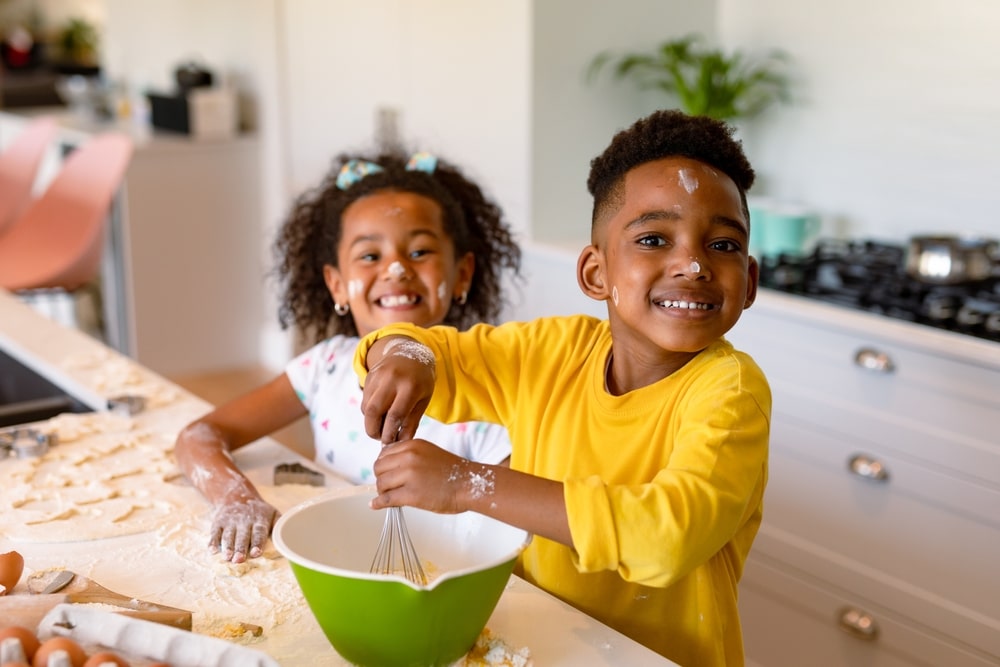
Every parent knows the internal monologue that happens around 5:30 PM. You want to get dinner on the table, but your child wants to “help.” You envision flour on the ceiling, shells in the omelet, and a 20-minute task turning into an hour-long ordeal. It is tempting to usher them toward the living room so you can just get it done. However, looking at the long-term data, that extra mess is actually a profound investment. Research highlights a striking trend: children who actively participate in meal preparation consume significantly more vegetables daily than those who don’t. Beyond the nutritional boost, you are teaching a life skill that eventually leads to a child who can pack their own lunch—a milestone every parent dreams of reaching.
The science-backed advantages of kitchen activities for children (that truly matter)
When you are wiping spilled milk off the floor for the third time, it helps to remember the developmental “why” behind the chaos. Cooking isn’t just about food; it’s a full-brain workout.
Increased Palate Flexibility: There is a psychological shift that happens when a child prepares a dish. They move from being a passive consumer to an active creator. When a child chooses the seasoning or tears the kale themselves, they develop “ownership” over the meal. This drastically reduces “food neophobia” (the fear of new foods) and makes them much more likely to actually taste what they’ve made.
Practical Application of Academics: The kitchen is a living laboratory. When a child levels off a cup of flour or doubles a recipe, they are practicing fractions and volume. When they watch water boil or yeast rise, they are witnessing chemical reactions. This “stealth learning” reinforces school concepts without the pressure of a classroom setting.
Development of Executive Function: Following a recipe requires planning, sequencing, and focus. A child has to understand that Step A must happen before Step B. These executive function skills—organization, problem-solving, and impulse control—are the same ones they need to succeed in school and later in life.
Motor Skill Refinement: From the pincer grasp used to sprinkle salt to the bilateral coordination required to hold a bowl while stirring, cooking is an excellent way to sharpen fine motor skills and hand-eye coordination.
Emotional Connection and Quality Time: In an age of digital distractions, the kitchen remains one of the few places where families can engage in “parallel play” and conversation. It builds a sense of belonging and contribution, which is essential for a child’s self-esteem.
Age-appropriate tasks (the reality check)
While every child develops at their own pace, having a roadmap of what to expect can lower your stress levels. The goal is to challenge them without overwhelming their current abilities.
Babies and toddlers (under 2)
At this stage, “helping” is mostly about exposure. They aren’t going to chop onions, but they are soaking up the environment.
What they can do: Sit in a high chair or a safe learning tower and explore the sensory side of food. Let them smell the herbs, touch the cold skin of a bell pepper, or play with plastic measuring cups. Narrative cooking—where you describe everything you are doing—helps build their vocabulary long before they can speak.
Toddlers (ages 2-3)
Toddlers thrive on “heavy work” and tactile experiences. This is the age of exploration and, admittedly, very short attention spans.
What they can do:
- Rinse fruits and vegetables in a sturdy bowl.
- Tear greens like spinach or lettuce into bite-sized pieces.
- Stir cold ingredients together.
- Transfer chopped items from the cutting board to a bowl.
- Apply “toppings” like cheese or seeds to a dish.
Reality Check: Their participation might only last five minutes. That’s okay. The goal is positive association, not completion of the meal.
Preschoolers (ages 3-5)
Preschoolers are eager to prove their independence. They want to do “real” work, and they are starting to develop the coordination to handle more complex tasks.
What they can do:
- Mash soft foods like bananas for muffins or potatoes for dinner.
- Spread soft spreads using a dull butter knife.
- Use cookie cutters for shapes.
- Crack eggs (expect shells; keep a spare bowl handy for “retrieval”).
- Help set the table and clear non-breakable items.
Reality Check: They are prone to “creative” interpretations of recipes. Encourage their curiosity, but keep a close eye on the salt shaker.
Early elementary (ages 6-8)
This is the “competence” stage. Children in this age bracket can start taking on tasks that actually save you time in the long run.
What they can do:
- Use a vegetable peeler (away from their body).
- Whisk eggs or light batters vigorously.
- Sift dry ingredients.
- Help write the weekly grocery list based on what’s in the pantry.
- Operate basic appliances like a toaster or a salad spinner.
Reality Check: While they are more capable, they still lack a full “safety” internal compass. Constant supervision around heat and sharp edges remains a must.
Older elementary (ages 9-12)
By the time they reach late elementary school, many children can function as legitimate sous-chefs.
What they can do:
- Follow a simple recipe from start to finish.
- Use a chef’s knife with proper technique (start with soft items like strawberries).
- Manage the stovetop (boiling pasta, scrambling eggs) with adult supervision.
- Use a microwave independently.
- Clean up their workspace—an essential part of the cooking process.
Reality Check: This is the payoff stage. They are building the confidence to nourish themselves, which is a massive win for their future autonomy.
Making it all work (without losing your mind)
The secret to successful cooking with kids isn’t a better recipe; it’s a better mindset.
Lower the Bar: Accept that the kitchen will be messy. Accept that the meal might be 15 minutes late. If you approach the session as “activity time” rather than “efficiency time,” you’ll be much less stressed.
Prioritize Safety Education: Before any cooking starts, establish the “non-negotiables.” This includes handwashing, hair tied back, and understanding “hot” and “sharp.” Start them with nylon safety knives or butter knives to build confidence before moving to metal blades.
Create a “Yes” Space: If you’re worried about them ruining a specific dish, give them a small portion of the ingredients to “experiment” with in their own bowl. This allows them to explore without affecting the final family meal.
Narrate the Process: Talk about where the food comes from. Explain why we sauté onions (to make them sweet) or why we use baking powder (to make things fluffy). This turns a chore into a conversation.
Embrace the “Oops”: If a cake falls or a dish is too salty, don’t sweat it. Use it as a lesson in resilience. Laughing through a kitchen fail teaches kids that mistakes aren’t the end of the world—they’re just part of the process.
Summary: The Long-Game Approach to Parenting
Involving children in the kitchen is undeniably more work in the short term. It requires patience that can be hard to find after a long workday. However, the benefits extend far beyond a single meal. By inviting them into the heart of the home, you are fostering a healthy relationship with food, building their cognitive and motor skills, and strengthening your family bond. Most importantly, you are raising a human being who is capable, confident, and equipped to take care of themselves. One day, when they are teenagers and they wake up early to make you breakfast, you’ll look back at the flour-covered toddler years and realize every second of that mess was worth it.