

















I have spent years interviewing leading health researchers and medical experts, and if there is one universal truth they all agree on, it is this: sleep is a non-negotiable pillar of health. However, many parents unknowingly sabotage their family’s rest with a small, seemingly innocent device: the night light. While these glowing beacons are often intended to provide comfort, they can actually disrupt the delicate biological processes required for deep, restorative sleep.
When I first overhauled our family’s sleep environment, the results were immediate. By prioritizing a cool, pitch-black room, we saw a marked improvement in sleep quality and daytime energy levels. The science behind this shift is compelling, suggesting that even a small amount of light can interfere with our internal clocks.
What’s the Problem With Night Lights?
The primary issue with nighttime light exposure is its effect on melatonin, the hormone responsible for signaling to the body that it is time to rest. Research, including insights from experts like Dr. Joyce Walseben, indicates that light inhibits melatonin production. Even with our eyes closed, our brains can detect light through our eyelids, leading to a state of “confused” sleep where the brain stays more alert than it should.
From an evolutionary perspective, our bodies are designed for a cycle of natural light and total darkness. For most of human history, the only light after sunset came from the moon or the warm, flickering glow of a fire—neither of which contains the disruptive blue light found in modern bulbs. Today, chronic exposure to artificial light at night is being studied for its links to more serious health concerns, including hormonal imbalances, mood disorders like depression, and even an increased risk of certain cancers.
Interestingly, data from the CDC has highlighted that individuals with profound blindness have significantly lower risks of certain cancers compared to those with normal vision. This suggests that the physiological impact of “seeing” light at night goes far beyond mere eye irritation; it affects our cellular health and circadian rhythms on a fundamental level.
Night Light Free Zone Importance For Kids
For children, the stakes of a dark room are even higher. Quality sleep isn’t just about avoiding crankiness; it’s a major factor in metabolic health. Recent studies published in 2024 emphasize that consistent, high-quality sleep helps regulate the genes associated with obesity. When a child’s sleep is shortened or fragmented by light, it can disrupt the hormones that manage appetite and carbohydrate processing, potentially leading to long-term weight struggles.
Sleep experts also point out that “sleep-wake variability”—the inconsistency of when a child goes to bed and wakes up—can be just as damaging as a lack of sleep. A dark, stable environment helps anchor these rhythms, ensuring the body knows exactly when to enter deep recovery modes.
Why Sleep is So Critical For Kids
During sleep, the brain performs a “housecleaning” process, clearing out metabolic waste and organizing the day’s information. For a developing child, this process is essential for cognitive growth and emotional regulation. When children are deprived of dark, uninterrupted sleep, we often see a cascade of behavioral and physical issues, such as:
- Increased anxiety, irritability, and mood swings.
- Difficulty concentrating and symptoms that mimic ADHD.
- Weakened immune systems and higher instances of allergies.
- Memory retention problems and poor academic performance.
- Elevated stress hormones and irregular heart rates.
Blue light, which is emitted by tablets, TVs, and many standard night lights, is particularly problematic because it mimics the frequency of sunlight, tricking the brain into thinking it is midday. To counter this, it is equally important to get children into bright, natural sunlight early in the morning to “reset” their internal master clock for the following night.
Practical Changes For Better Sleep
Transitioning a household to a dark-sleep philosophy takes time, but it is one of the most impactful changes a parent can make. As an adult, I found it easy to embrace the darkness, but for children—especially those with a fear of the dark—it requires a more gradual, thoughtful approach.
In our home, we focus on managing the spectrum of light. We use amber or red-toned bulbs in the evening because these warmer wavelengths do not suppress melatonin the way blue and white lights do. We also prioritize morning sun exposure to ensure everyone’s circadian rhythm is properly anchored from the start of the day.
Step by Step How to Ditch the Nightlights (Mostly)
If you are ready to reclaim your child’s sleep environment, here is a practical roadmap to help them transition away from standard night lights:
- Audit the room: Remove any devices with glowing screens, bright LED clocks, or standby lights.
- Install blackout shades: These are essential for blocking out streetlights and passing cars, while also helping with temperature regulation.
- Introduce white noise: A sound machine or an air filter with a consistent hum can provide a sense of “presence” that replaces the comfort of a light.
- Manage the hallway: If your child needs light for bathroom trips, place red-light night lights or Himalayan salt lamps in the hallway or bathroom rather than inside their bedroom.
- Keep it cool: A drop in core body temperature is a signal for sleep. Use breathable bedding and keep the room temperature slightly lower than the rest of the house.
Helpful Tips For Better Sleep
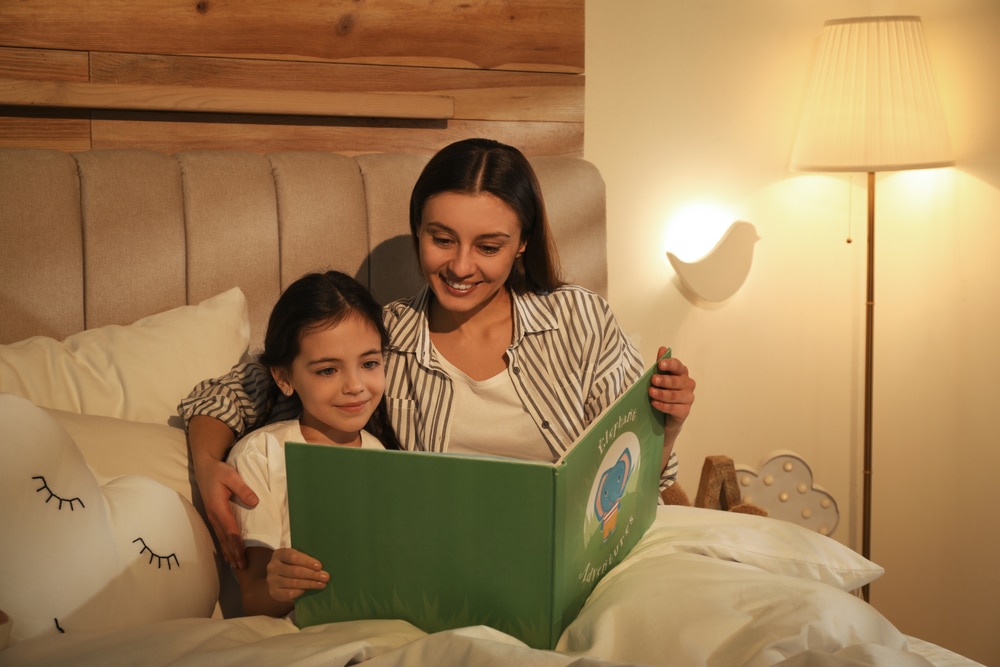
To make the “dark room” transition easier, focus on a calming sensory routine before the lights go out. I found that reading to my kids with an amber lamp, then slowly transitioning to leaving the door slightly ajar with a hallway salt lamp, helped them feel secure until they were comfortable in total darkness.
Other helpful bedtime additions include:
- Magnesium: Applying magnesium lotion to a child’s feet can promote relaxation and deeper sleep.
- Herbal Tea: A small cup of chamomile tea with a teaspoon of healthy fat (like butter or coconut oil) can stabilize blood sugar and soothe the nervous system.
- Digital Sunset: Aim for a “no-screens” rule at least 60 to 90 minutes before bed. If devices are necessary for schoolwork, use blue-light-blocking glasses.
Let Them Be A Part of the Process
Children are often more resilient and understanding than we give them credit for. When I explained the science of “sleep hormones” to my older children, they were much more willing to participate in the change. By framing the removal of night lights as a way to help their bodies grow stronger and their brains work better, it became a shared health goal rather than a strict rule.
Involving them in choosing a new “red light” for the hallway or picking out a favorite sound machine setting gives them a sense of agency, making the transition much smoother.
Final Thoughts on Night Lights
Protecting a child’s sleep is one of the most fundamental jobs of a parent. While it might feel like you are taking away a comfort item, you are actually giving them the gift of better long-term health, improved focus, and hormonal balance. By swapping out blue-light-emitting night lights for a pitch-black environment and a supportive evening routine, you set the stage for a lifetime of healthy rest. It may take a few nights of adjustment, but the boost in your child’s well-being is well worth the effort.